
Most students think health management means hitting the gym or eating more vegetables. The reality is far more layered. Balanced student health spans physical, mental, and social well-being, and each dimension directly shapes how well you perform academically. Skip one, and the others start to slip too. This guide breaks down the science, the practical tools, and the daily habits that help you build a health system that actually works in college and beyond. Whether you are managing stress before finals or trying to eat well on a tight budget, these strategies are built for your reality.
Table of Contents
- Understanding health management: Core principles for students
- Physical health strategies: Nutrition, sleep, and activity on a student budget
- Mental and social well-being: Managing stress, anxiety, and connection
- Preventive care and emerging best practices: Vaccines, screenings, and tech solutions
- From confusion to confidence: A practical health management checklist
- Our take: Why integrated, adaptive health management is the real student edge
- Next steps: Tools and resources for building your best student life
- Frequently asked questions
Key Takeaways
| Point | Details |
|---|---|
| Integrated approach | Physical, mental, and social health support each other and boost academic success. |
| Small habits matter | Routine sleep, mindful nutrition, and micro-workouts have outsized impact on well-being. |
| Prevention is key | Vaccinations and check-ups help you stay on track and avoid setbacks. |
| Leverage tech tools | Apps can personalize health routines and make managing wellness easier. |
Understanding health management: Core principles for students
Let's start by unpacking exactly what health management means for today's students.
Health management is not a single habit or a weekly routine. It is an ongoing process of making decisions that support your physical energy, emotional stability, and social connection. Most students focus almost entirely on physical health, and that is the first mistake. Your body, mind, and relationships are wired together. When one breaks down, the others feel it.
Two frameworks help explain why this matters. The American College Health Association (ACHA) outlines a comprehensive student health framework that emphasizes collaborative care and health promotion tailored to the unique pressures students face. The COM-B model, used widely in behavioral health research, breaks behavior change into three parts: capability, opportunity, and motivation. Together, these models show that health is not just a personal willpower issue. It is shaped by your environment, your skills, and the systems around you.
Here is a quick comparison of how student-driven and institution-driven health programs differ:
| Approach | Student-driven | Institution-driven |
|---|---|---|
| Control | High personal agency | Structured and scheduled |
| Flexibility | Adapts to your life | Fixed programs and hours |
| Accountability | Self-monitored | External check-ins |
| Best for | Independent learners | Students needing structure |
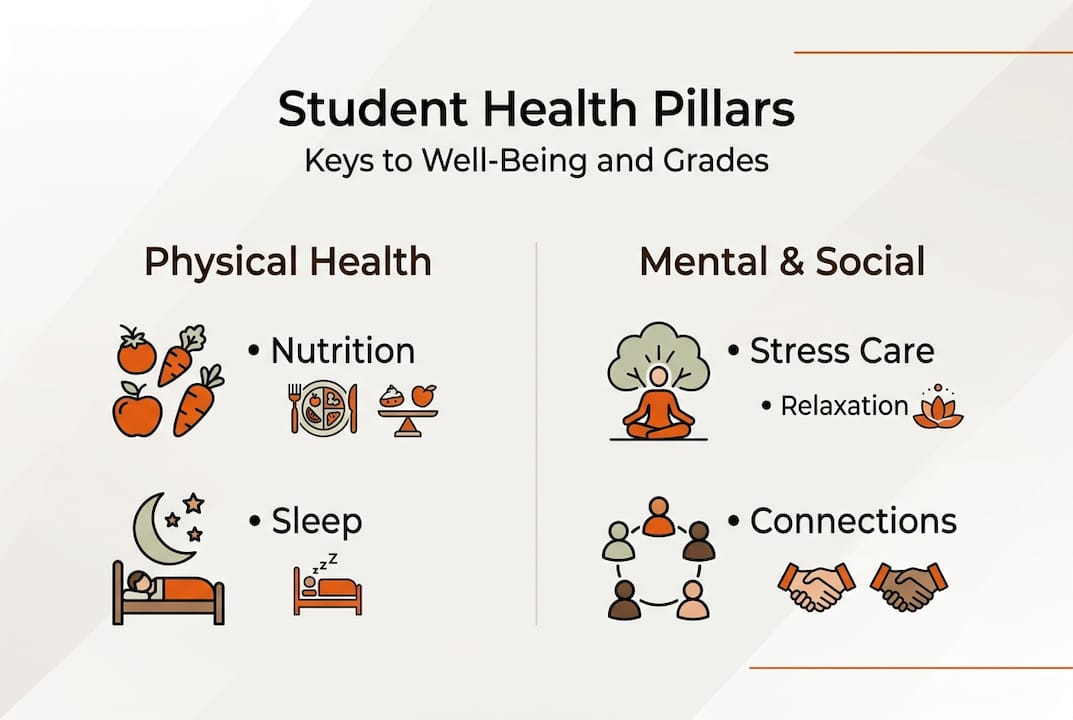
Most students benefit from blending both. Use campus resources as a foundation, then build personal habits on top.
Common misconceptions worth addressing:
- Health management is only about physical fitness
- Mental health only matters when there is a crisis
- Social connection is a luxury, not a health factor
- Preventive care is for older adults, not students
"Health is not merely the absence of disease. For students, it is the presence of the energy, focus, and resilience needed to learn and grow."
When you treat all three pillars equally, physical, mental, and social, you stop reacting to health problems and start preventing them. That shift is where real academic and personal gains happen.
Physical health strategies: Nutrition, sleep, and activity on a student budget
Now that you know the pillars, let's zoom in on the day-to-day habits that make up physical wellness, especially when time and money are tight.
According to the ACHA-NCHA Fall 2024 data, 67.8% of students reported good or excellent health, but food insecurity and poor sleep remain persistent problems across campuses. That gap between self-reported health and actual habits is real and worth paying attention to.
| Health factor | % of students struggling (Fall 2024) |
|---|---|
| Poor sleep quality | Over 60% |
| Food insecurity | Approximately 30% |
| Insufficient physical activity | Nearly 50% |
Nutrition does not have to be expensive or complicated. A few practical moves make a big difference:
- Use the YourPlate method: fill half your plate with vegetables or fruit, one quarter with protein, one quarter with whole grains.
- Hit the salad bar first at the dining hall to load up on fiber before reaching for heavier options.
- Stock your dorm with budget staples: oats, eggs, canned beans, frozen vegetables, and peanut butter.
- Batch cook on Sundays to avoid defaulting to fast food during busy weekdays.
For student nutrition on a budget, simplicity beats perfection every time. You do not need a meal plan app. You need three or four reliable meals you can rotate.
Sleep is where most students lose the most ground. Inconsistent schedules wreck your circadian rhythm and tank your focus. Try anchoring your wake time, not your bedtime. Getting up at the same time every day, even on weekends, stabilizes your sleep cycle faster than any supplement.

Pro Tip: A 20-minute walk between classes counts as exercise. You do not need a gym membership to stay active. Micro-workouts, short bursts of movement spread across the day, add up to real fitness gains over a semester.
Mental and social well-being: Managing stress, anxiety, and connection
Physical health is just one side of the coin. Let's tackle the mental and social factors that drive or drag student success.
Mental health struggles affect over 40% of college students, and psychological health is one of the strongest predictors of GPA. Anxiety and depression do not just feel bad. They physically impair memory consolidation, attention, and decision-making, the exact skills you need to succeed academically.
Recognizing when you need support is a skill in itself. Watch for these warning signs:
- Persistent difficulty concentrating for more than 20 minutes
- Avoiding classes or social situations you used to enjoy
- Sleep changes that last more than two weeks
- Feeling overwhelmed by tasks that used to feel manageable
Practical stress management does not require a therapist's appointment. Start small. A five-minute breathing exercise before a lecture, a short walk after studying, or a scheduled "worry window" where you write down anxieties for 10 minutes and then close the notebook. These micro-habits interrupt the stress cycle before it compounds.
Pro Tip: Use a free mindfulness app for just five minutes before bed. Consistency matters far more than duration. Even brief daily practice lowers cortisol levels over time.
Social well-being is often the most overlooked health factor. Research shows that social well-being strongly predicts student motivation, though it does not automatically translate into higher grades. The mechanism is indirect but powerful: when you feel connected, you show up, you engage, and you persist through hard material.
Building connection does not require a packed social calendar. Join one club aligned with a genuine interest. Eat lunch with a classmate once a week. Check in with a family member regularly. Small, consistent social investments compound into a support network that carries you through rough semesters.
Balancing independence and support is its own skill. Asking for help is not a weakness. It is one of the most evidence-backed strategies for long-term academic resilience.
Preventive care and emerging best practices: Vaccines, screenings, and tech solutions
Building on foundational habits and emotional skills, how do you stay ahead with prevention and the latest support tools?
Preventive health means acting before problems appear, not waiting until you are sick or overwhelmed. For college students, this includes a specific set of recommended actions.
The ACHA recommends that students stay current on key student immunizations including MMR, MenACWY, HPV, COVID-19 boosters, and Tdap. TB screening is also advised for students in high-risk environments or traveling internationally. These are not optional extras. They are baseline protections for living in close quarters with thousands of other people.
Here is a prioritized preventive care checklist for students:
- Confirm your vaccination records are up to date before each academic year.
- Schedule an annual physical, even if you feel fine.
- Get a dental checkup at least once a year.
- Screen for STIs if sexually active, as recommended by your campus health provider.
- Monitor blood pressure and cholesterol if you have family risk factors.
"Prevention is not about fear. It is about protecting your future self so you can stay in the game longer."
Technology is changing what preventive health looks like for students. AI-personalized wellness tools are not just convenient. Research shows that AI-driven exercise interventions can boost GPA by 10.28% and lower stress by 36.7%. That is a significant return on a relatively small daily investment.
Beyond fitness apps, AI tools can now help you track sleep patterns, flag mood changes, and suggest personalized stress-reduction strategies. The self-management skills you build with these tools in college transfer directly into your professional life after graduation, where no one will remind you to take care of yourself.
From confusion to confidence: A practical health management checklist
Ready to put these insights into practice? Here is your game plan for turning knowledge into better health and grades.
The research is clear: combining personal skills with environmental supports produces the best health outcomes for students. A checklist gives you both structure and flexibility.
Daily habits:
- Sleep and wake at consistent times, even on weekends.
- Eat at least one balanced meal using the YourPlate framework.
- Move your body for at least 20 minutes, even if it is just walking.
- Take one five-minute mental break for every 90 minutes of studying.
- Check in with one friend or family member.
Weekly habits:
- Meal prep or plan your meals for the week ahead.
- Review your stress levels and identify one trigger to address.
- Engage with one campus resource, whether a club, gym, or counseling drop-in.
- Track one health metric that affects your focus, such as sleep hours or mood.
Semester habits:
- Schedule a campus health visit at the start of each semester.
- Review your vaccination and screening status.
- Reassess your social network and identify any gaps in support.
Pro Tip: Pick one metric to track this week, whether sleep duration, daily steps, or mood score. Tracking a single variable builds self-awareness faster than tracking everything at once.
| Timeframe | Focus area | Goal |
|---|---|---|
| Daily | Sleep, nutrition, movement | Build baseline habits |
| Weekly | Stress, social connection | Adjust and reflect |
| Semester | Preventive care, environment | Audit and upgrade |
This checklist works in college and scales into adult life. The habits you build now are the ones you will rely on when the real pressure hits after graduation.
Our take: Why integrated, adaptive health management is the real student edge
All strategies aside, here is a reality check on why integrated health management matters more than any single tip.
Most health guides for students are essentially long lists of physical health advice. Eat better. Sleep more. Exercise. That advice is not wrong, but it misses the point. The students who consistently outperform their peers are not the ones with the best diets. They are the ones who have built systems that connect physical energy, mental stability, and social support into a single adaptive loop.
The hidden advantage is adaptability. When finals hit and your sleep suffers, a student with strong social ties and mental coping skills recovers faster than one who only focused on nutrition. When you lose your workout routine during a tough week, a student who also practices mindfulness and stays connected does not spiral. The system catches you.
We also think too many students treat health as a personal responsibility and ignore the environment entirely. Your campus, your friend group, your digital tools, these are leverage points. Using them is not cheating. It is smart systems thinking. The students who figure this out early carry that edge long after graduation.
Next steps: Tools and resources for building your best student life
Want actionable support to put these principles into practice? Explore tailored tools that help you manage your health and thrive.
Building consistent health habits is easier when you have the right tools in your corner. Apps designed for students can help you track habits, manage stress, and stay accountable without adding complexity to your already full schedule.
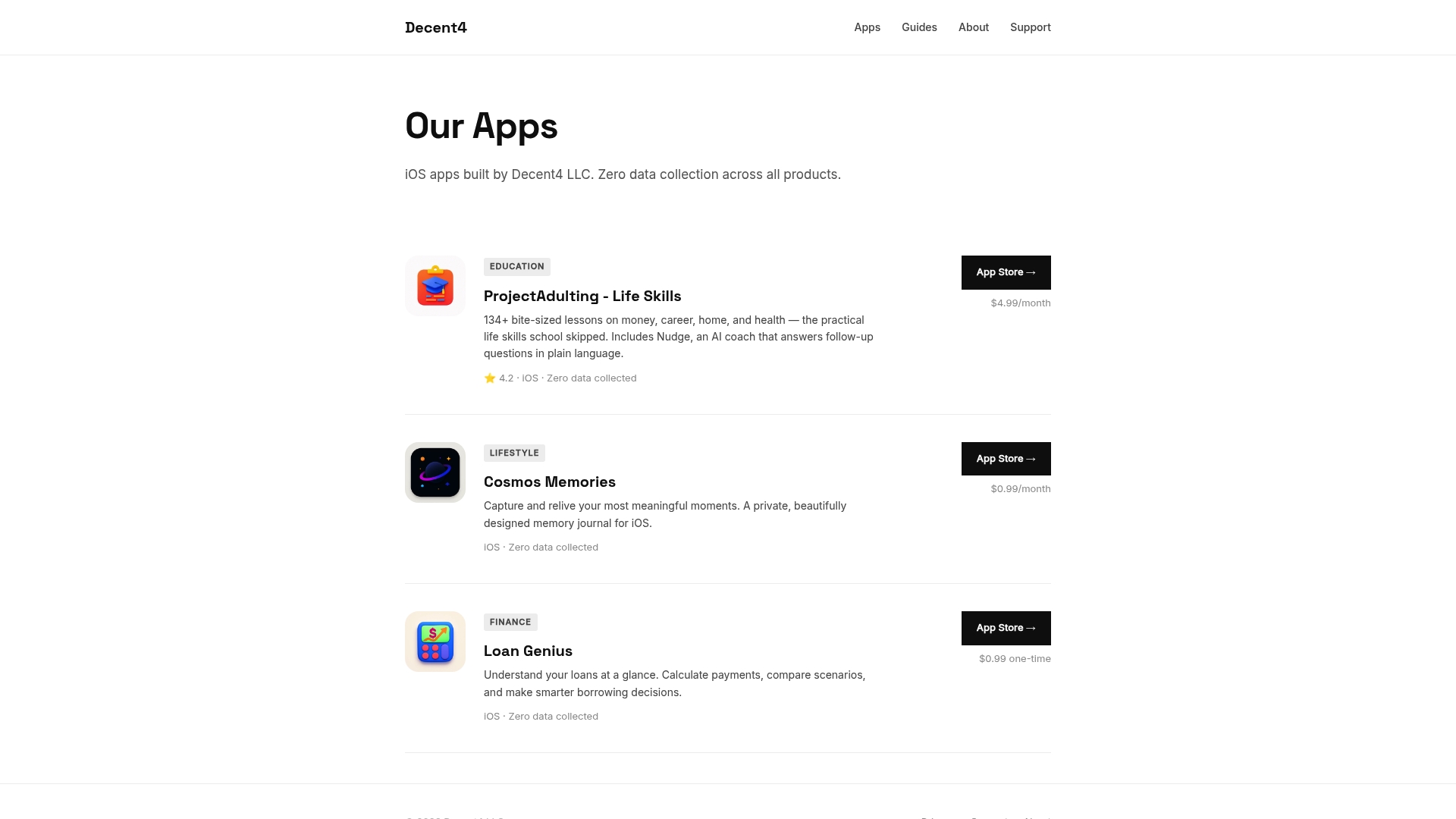
Wellness apps for students built with privacy in mind make it easier to stay consistent without handing over your personal data. Decent4's flagship app, ProjectAdulting, offers over 134 short lessons covering health management, budgeting, and career planning, all guided by AI and designed for the real challenges of student life. Zero data collection means you get personalized support without the privacy trade-off. Learn more about Decent4 and ProjectAdulting and see how the right tools can turn these health strategies into lasting habits.
Frequently asked questions
What does health management mean for college students?
Health management for students means actively improving physical, mental, and social well-being to support academic and personal goals. A balanced approach to health directly strengthens focus, resilience, and performance.
Which health issues are most common among college students?
Anxiety, food insecurity, poor sleep, and weight changes are among the most common and often overlapping challenges. Anxiety and food insecurity rates remain high across campuses as of Fall 2024.
How can students manage health with limited time and money?
Utilize micro-workouts, simple meal frameworks like YourPlate, and prioritize preventive care to make healthy habits fit a busy, budget-conscious lifestyle. Simple eating frameworks prove effective without requiring expensive tools or memberships.
Do health habits really impact grades?
Yes, evidence shows better sleep, nutrition, and stress management are strongly linked to higher academic performance. Multi-level health interventions consistently improve both well-being and academic outcomes.
Are there recommended vaccinations or screenings for college students?
Vaccines like MMR, MenACWY, HPV, and COVID-19 plus routine screenings are advised for campus health. ACHA immunization guidelines are updated regularly and tailored specifically to the college environment.